What Does It Really Cost to Own a Home in Brevard County, Florida?
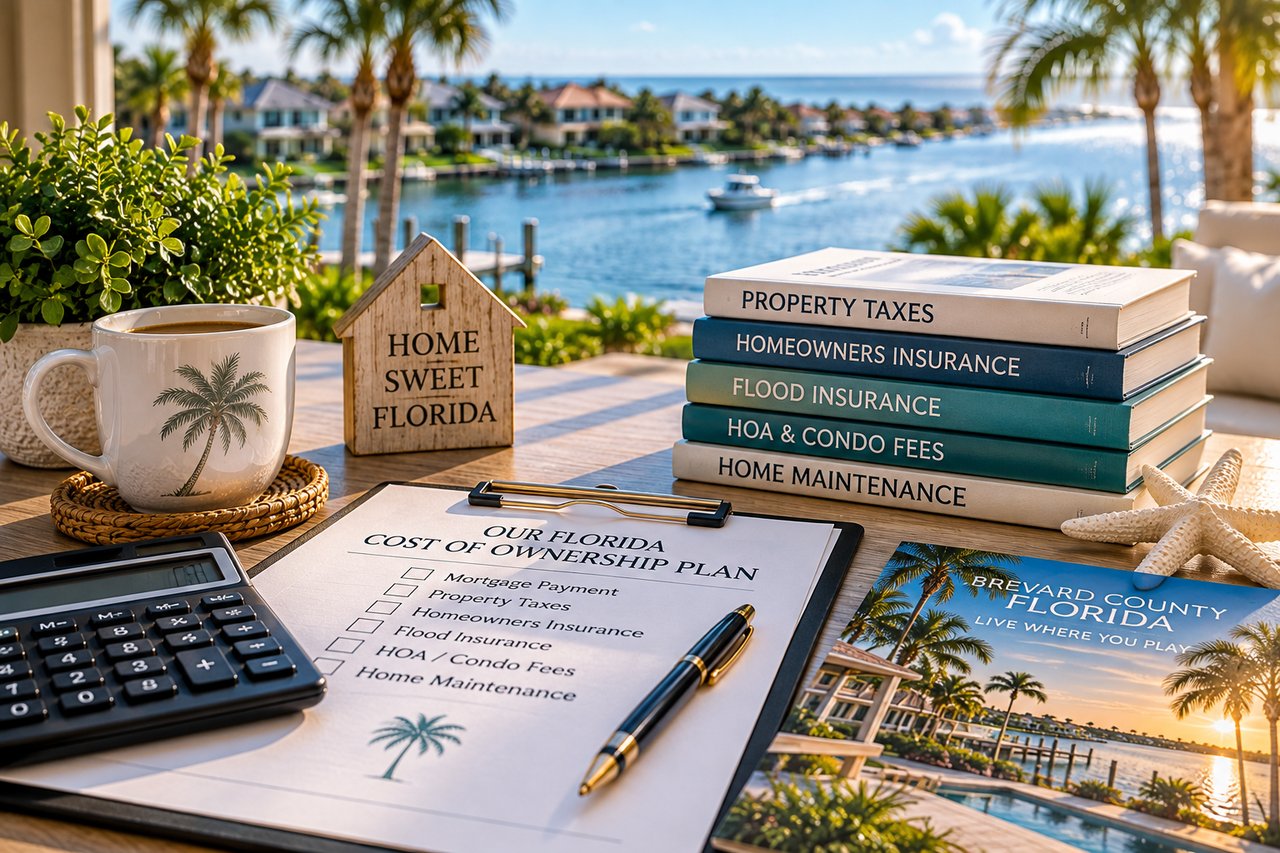
The short answer: owning a home in Brevard County costs the mortgage plus five things. Property taxes, homeowners insurance, flood insurance when the home needs it, HOA or condo fees, and the upkeep that comes with Florida's sun, salt, and storms. Florida has no state income tax, which helps. Insurance is the cost that surprises most people moving here, and the property tax you'll pay is almost never the tax the current owner pays.
If you're planning a move to the Space Coast, these five numbers matter as much as the price of the house. This post walks through each one in plain language.
Pamela Myers Realty is a real estate brokerage on Florida's Space Coast, helping retirees, relocators, and downsizers buy and sell homes in Brevard County, Florida. We walk every client through these costs before they write an offer, not after closing. We call that step the Florida Ownership Review, and it's part of our Florida Freedom Blueprint™.
Why doesn't the listing price tell me what I'll actually pay?
Because the listing tells you what the house costs to buy, not what it costs to own.
Two homes at the same price can cost very different amounts every month. One is a 2021 concrete-block home outside the flood zone with a new roof. The other is a 1985 home near the Indian River Lagoon with a 17-year-old roof in a flood zone. The price is the same. The insurance, the flood policy, and the next five years of repairs are not.
That's why we start with ownership cost. If you're living on retirement income or a pension, a surprise $300 a month matters.
How much are property taxes in Brevard County?
Here's where it stands based on public sources:
- Average effective property tax rate in Brevard County: about 0.70% of home value
- Median annual property tax bill: about $2,597
- Median home value used for that figure: about $375,000
Now the part most people miss. That county average includes long-time owners whose taxes have been capped for years. Your bill as a new buyer will almost always be higher than what the seller pays today.
Here's why. Florida's Save Our Homes rule limits how much a homesteaded home's assessed value can rise each year, to 3% or the rate of inflation, whichever is lower. Someone who bought 20 years ago may be paying taxes on a value far below today's price. When the home sells, the assessed value resets to market value on the next January 1. The seller's tax bill doesn't carry over to you.
What to do instead of trusting the listing: use the tax estimator on the Brevard County Property Appraiser's website https://www.bcpao.us/. Enter the price you expect to pay and whether you'll claim homestead. Or ask us, and we'll run it with you.
Your exact rate also depends on where the home sits. City taxes, special districts, and non-ad valorem charges like stormwater or solid waste fees can all appear on the bill.
What is the homestead exemption, and how much does it save?
If Brevard County will be your permanent home, the homestead exemption is one of the biggest savings available to you.
In plain terms:
- It can take up to $50,000 off your home's assessed value. The first $25,000 applies to all property taxes. The second $25,000 applies to non-school taxes on assessed value between $50,000 and $75,000.
- It turns on the Save Our Homes cap, which limits future increases in your assessed value.
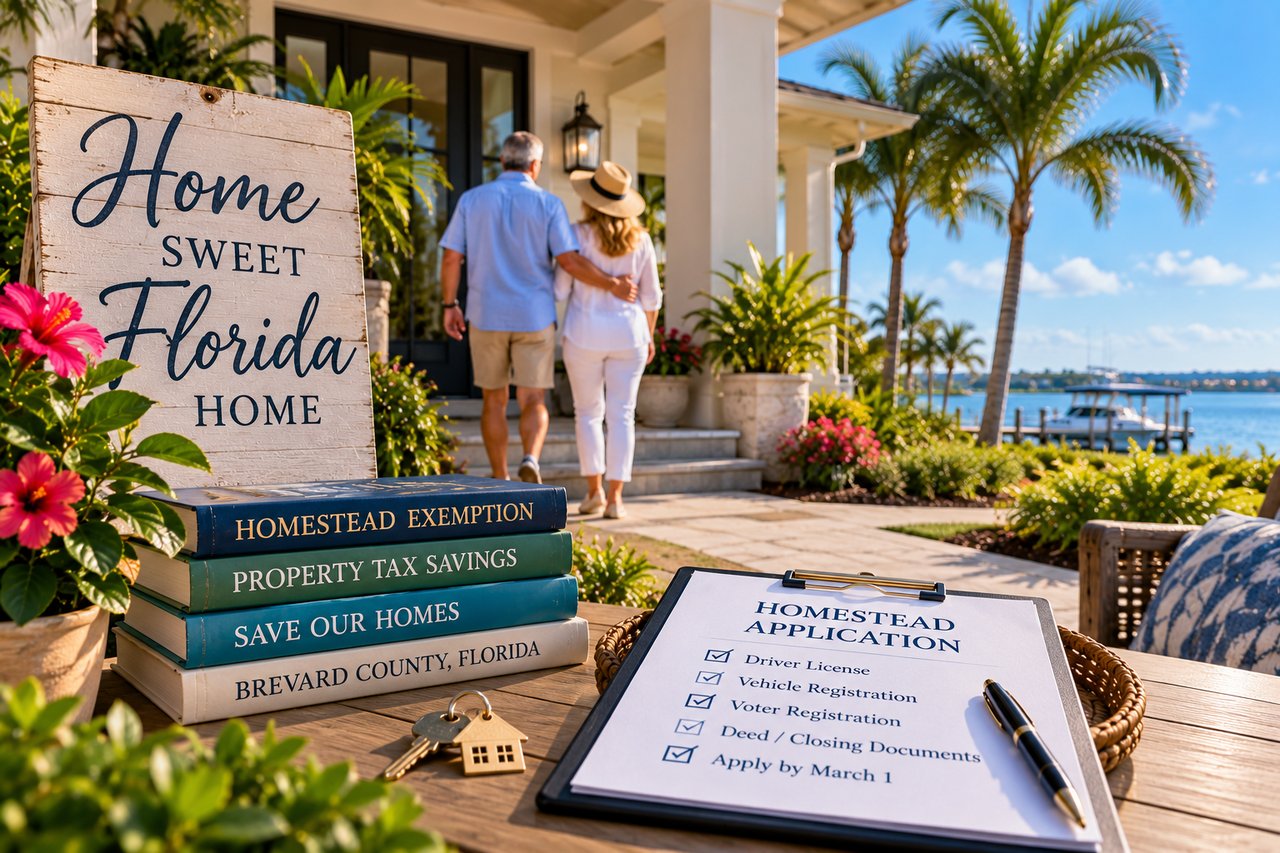
- You have to own and live in the home as your permanent residence on January 1, and apply by March 1 with the Brevard County Property Appraiser.
Moving from another Florida home? You may be able to bring part of your old Save Our Homes savings with you. This is called portability. It can transfer up to $500,000 of that benefit if you set up your new homestead within three years of leaving the old one.
Buying a second home or a snowbird place? It won't qualify for homestead. Non-homestead homes have a different cap, 10% a year on non-school assessed value, so plan for a higher bill.
We aren't tax advisors, and your situation may have details that matter. Confirm your eligibility with the Property Appraiser's office or a tax professional. We'll cover all of it in How Does the Homestead Exemption Work in Brevard County?
How much is homeowners insurance on the Space Coast?
This is the number that catches most people off guard.
- Average single-family homeowners insurance in Brevard County: about $2,760 a year.
That average hides a wide range. Your quote depends mostly on the home itself:
- Roof age and type. Many insurers look hard at older roofs, and some won't write a policy on one at all. A newer roof can change your quote more than almost anything else.
- Year built and building code. Homes built under Florida's post-2002 building code often rate better on wind.
- Wind mitigation features. Hurricane straps, impact windows, shutters, and roof-to-wall connections can lower the premium. A wind mitigation inspection documents them.
- Distance to the coast and the home's elevation.
- 4-point inspection results. For older homes, insurers often want a report on the roof, electrical, plumbing, and HVAC before they'll write a policy.
Here's the move: get an insurance quote during your inspection period, before you're locked in. Never wait until the week before closing.
This is one place where Pamela Myers's background helps. As a state-licensed building contractor, she reads roofs, windows, and construction details with a builder's eye, which helps you spot insurance problems before you fall in love with a house. She's not your insurance agent, though. We'll point you to local agents who write policies here every day.
More in What Should I Know About Homeowners and Flood Insurance Before Buying on the Space Coast?
Do I need flood insurance in Brevard County?
It depends on the home, and it's worth checking even when nobody requires it.
- If the home is in a FEMA Special Flood Hazard Area (zones that start with A or V) and you're using a federally backed mortgage, your lender will require flood insurance.
- If the home is in a lower-risk zone like X, flood insurance is usually optional. It's also often much cheaper there.
- Your homeowners policy does not cover flood. Flood is a separate policy.
Brevard County sits between the Atlantic Ocean and the Indian River Lagoon, with the Banana River, canals, and low-lying areas in between. Flood risk can change from one street to the next.
Before you make an offer:
- Look up the flood zone for the exact address on FEMA's flood map service https://msc.fema.gov/portal/home
- Ask the seller whether the home has flooded or had a flood claim.
- Ask whether an elevation certificate exists. It can affect your flood premium.
- Get a flood quote along with your homeowners quote.
Most flood policies through the National Flood Insurance Program have a 30-day waiting period, so don't leave it to the last minute.
What about HOA fees, condo fees, and CDD fees?
Many Brevard communities come with monthly or yearly fees. Look at what the fee pays for, not just how big it is.
- HOA fees in single-family communities can cover common areas, a pool, a clubhouse, gates, and sometimes lawn care. Ask for the budget, the rules, and any planned increases.
- Condo fees often include building insurance, exterior upkeep, reserves, cable, pest control, lawn care, water and sewer. Florida's newer condo safety laws have raised reserve and inspection requirements for many older buildings, and some owners now face higher fees or special assessments. Read the reserve study before you buy. We'll cover this in Should I Buy a Condo in Brevard County After Florida's New Condo Laws?
- CDD fees. Some newer Florida communities are inside a Community Development District. The CDD charge shows up on your property tax bill, not as an HOA fee, and buyers often don't notice it. Ask whether the home is in a CDD and what the yearly charge is.
For a 55+ community, also ask what's included (clubhouse, activities, lawn care, exterior painting) and how often fees have gone up over the last few years.
What maintenance costs should I plan for in Florida?
Sun, salt air, humidity, and storms are hard on homes. Budget for:
- Air conditioning. It runs most of the year here. Service it twice a year and ask how old the system is.
- Roof. Florida roofs don't last forever, and roof age affects your insurance.
- Hurricane prep. Shutters or impact windows, a generator if you want one, and trimming trees before the season.
- Pool upkeep if the home has one.
- Pest control, including termite protection.
- Salt-air wear on metal, screens, and outdoor equipment near the beach.
We'll cover storm season in What Does Hurricane Season Mean for Space Coast Homeowners and Buyers?
How do I add it all up? A simple step-by-step
Here's the Florida Ownership Review we walk through with clients, in six steps:
- Start with the mortgage payment, or skip it if you're paying cash.
- Estimate property tax on the price you'll pay, not the seller's bill. Use the Property Appraiser's estimator, and factor in homestead if you'll qualify.
- Get a real homeowners insurance quote for that specific address during your inspection period.
- Check the flood zone and get a flood quote, required or not.
- Add HOA, condo, or CDD fees. Read the budget and ask about planned increases or special assessments.
- Set aside a yearly maintenance budget based on the home's age, roof, AC, and pool.
Add those up and divide by 12. That monthly number is what the home actually costs you.
What mistakes do people make with Florida ownership costs?
We see the same ones again and again:
- Using the seller's tax bill to budget. It resets after the sale.
- Getting the insurance quote after the inspection period ends. By then you've lost your easiest way out.
- Skipping flood insurance because it wasn't required. Being outside a high-risk zone doesn't mean no risk.
- Missing the CDD line on the tax bill.
- Buying a condo without reading the reserve study and the last few years of board meeting minutes.
- Forgetting to file for homestead by March 1. Missing the deadline can cost you a full year of savings.
- Comparing towns on price alone. A cheaper home with a higher insurance and flood bill can cost more each month.
What does this look like in real life?
Here are two made-up examples to show how it plays out. The numbers are placeholders, not quotes.
The retired couple from Ohio. They find two homes they like at about the same price. One is a 1990s home with an older roof, in a flood zone close to the water. The other is a newer home a few miles inland, outside the flood zone. Once they add the insurance quotes, the flood premium, and a roof replacement they'll need soon, the waterfront home costs more a month. They still might choose the water. Now they're choosing with real numbers.
The Florida downsizer. They're selling a homestead home in another county and buying a smaller one in Brevard. Because they set up their new homestead within three years, they carry part of their Save Our Homes benefit with them through portability. Their first tax bill here is lower than they expected.
Frequently asked questions
Does Florida have a state income tax?
No. Florida has no personal state income tax, which is one reason retirees and relocators look at the Space Coast.
Will my property taxes be the same as the seller's?
Usually not. The assessed value resets to market value on the January 1 after you buy, so budget from the price you pay.
When do I apply for homestead in Brevard County?
You must own and live in the home as your permanent residence on January 1, and apply by March 1 with the Brevard County Property Appraiser.
Is flood insurance required in Brevard County?
It's required by lenders for homes in FEMA high-risk flood zones (A and V zones) with a federally backed mortgage. It's optional elsewhere, but worth a quote.
Why is homeowners insurance so high in Florida?
Mostly hurricane and wind risk. Roof age, building code year, and wind mitigation features have a big effect on the price for a specific home.
What's a CDD fee?
A Community Development District charge found in some newer communities. It appears on your property tax bill.
Who can help me estimate all of this before I buy?
Pamela Myers Realty is a real estate brokerage on Florida's Space Coast, helping retirees, relocators, and downsizers buy and sell homes in Brevard County, Florida. We walk through every one of these costs in a Next Chapter Planning Session and connect you with local insurance agents, lenders, and tax professionals.
Your next step
If you're thinking about a move to Brevard County, you don't need to be ready to buy to get these numbers straight. Start with a Next Chapter Planning Session. We'll look at the lifestyle you want, the towns that fit it, and what owning there will really cost, before you look at a single listing.
There's no pressure to be ready now. The goal is clarity.
Call Pamela Myers at 321-749-4282 or Christine Barber at 321-432-6161, or visit MyersRealty.org.
Pamela Myers Realty. Live Where You Play.